Long range ballistic missile Agni-V was yet again successfully test-fired from Wheeler Island, off the Odisha coast.
This is the fourth success in a row of Agni-V, which can carry a nuclear warhead weighing 1.5 tonnes over a distance of more than 5,000 km.
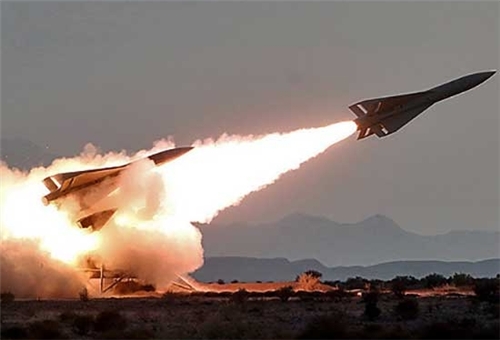
The surface-to-surface missile lifted off with a dummy warhead.
The previous successful missions were executed on April 19, 2012, September 15, 2013 and January 31, 2015.
Agni-V’s re-entry system worked perfectly. Its nose-cone that encases the warhead is made of carbon-carbon composites, which can withstand a searing temperature of about 3,000 degrees Celsius when the missile re-enters the earth’s atmosphere.
The importance of the success of Agni-V lay in the fact that it was fired from a canister mounted on a massive TATRA truck.
A gas generator at the bottom of the canister ejected the three-stage missile that weighs 50 tonnes and measures 17 metres long. It has a diameter of two metres. A launch from a canister mounted on a truck gives the missile flexibility of movement.
Agni-V can be made vertical in three minutes and fired from a roadside in a town.
The missile was tested in its final, deliverable version to the Army. Its configuration has already been frozen.
The bouquet of Agni-I, Agni-II, Agni-III, Agni-IV and Agni-V form the bulwark of India’s nuclear deterrence programme. All of them can carry nuclear warheads.
While Agni-I has a range of 700 km, Agni-II can take out targets 2,000 km away, Agni-III can travel 3,000 km and Agni-IV 4,000 km. The Army has already deployed these four missiles. Prithvi-II too can carry nuclear warheads.
All these missiles form part of the Integrated Guided Missile Development Programme.
About ‘Agni Missiles’:
The Agni missile is a family of medium to intercontinental range ballistic missiles developed by India, named after one of the five elements of nature.
Agni Missiles are long range, nuclear weapons capable surface to surface ballistic missile. The first missile of the series, Agni-I was developed under the Integrated Guided Missile Development Program and tested in 1989.
After its success, Agni missile program was separated from the IGMDP upon realizing its strategic importance. It was designated as a special program in India’s defence budget and provided adequate funds for subsequent development.
As of 2008, the Agni missile family comprises three deployed variants while two more variants are under testing:
| Name | Type | Range |
| Agni-I | MRBM | 700 – 1,250 km (Operational) |
| Agni-II | IRBM | 2,000 – 3,000 km (Operational) |
| Agni-III | IRBM | 3,500 – 5,000 km (Operational) |
| Agni-IV | IRBM | 3,000 – 4,000 km (Operational) |
| Agni-V | ICBM | 5,000 – 8,000 km (Testing) |
| Agni-VI | ICBM | 8,000 – 10,000 km (Under development) |